

Quotes & Things
I believe in adaptation. It’s part of that great tradition that we’ve always had as human beings, telling stories then passing them on. Stories gain a mythic fairy-tale status when they start getting changed a little bit. Different generations bring something different to it.
— Kazuo Ishiguro
I have recently read and watched several new adaptations of the same texts, so that’s what I want to explore today.
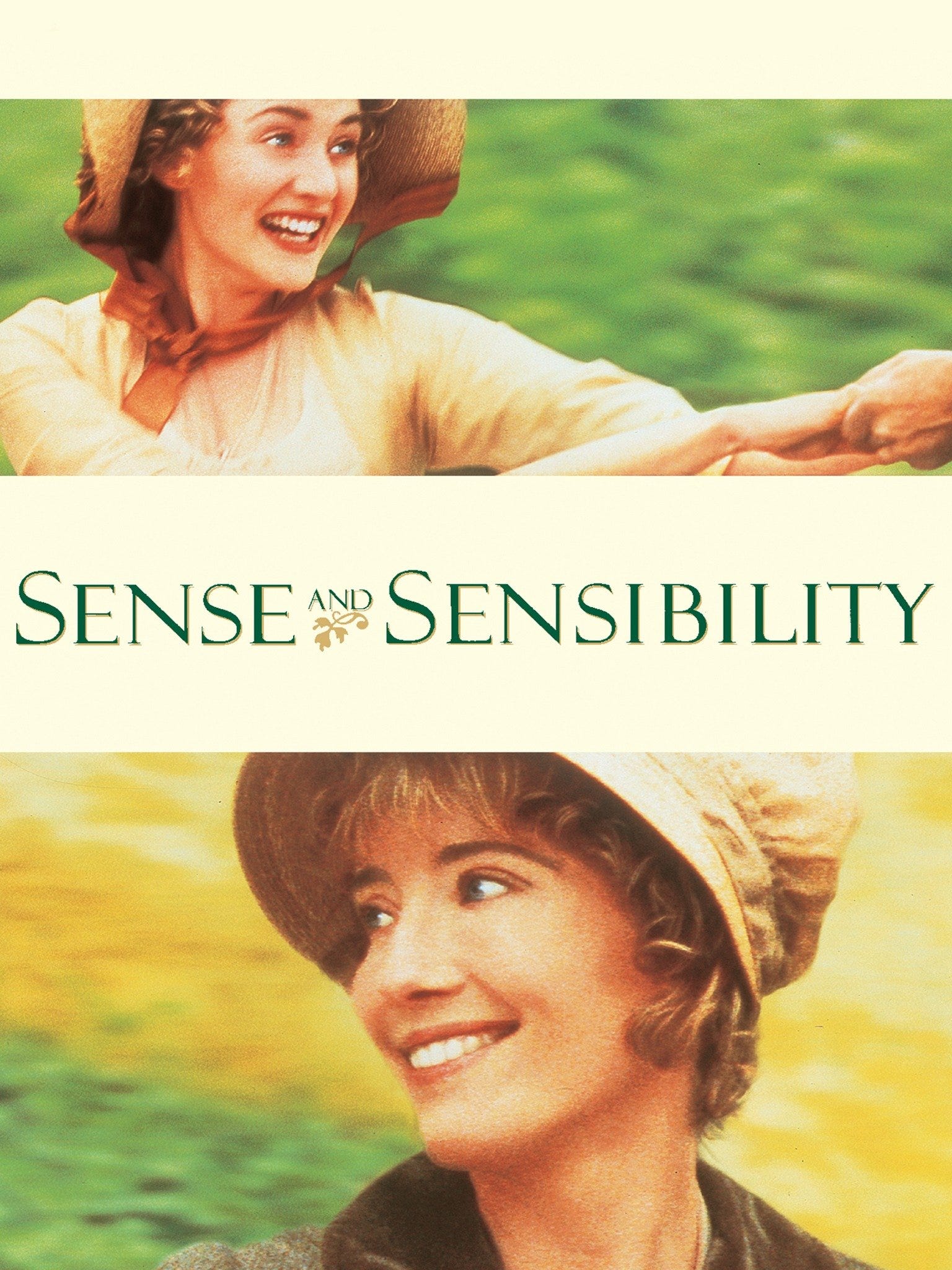
People generally say: “The book is always better than the movie.” But I remember the first time that adage did not ring true. Like any self-respecting pretentious teen, I read lots of Jane Austen. I loved Sense and Sensibility, but I thought some of the plot elements overwrought, especially where Willoughby was concerned. So when I saw the film Sense and Sensibility starring Emma Thompson, who also wrote the screenplay, I remember thinking — yes! This is a much better plot line. I have watched that film over and over, and I still love it. It’s still a pretty faithful adaptation (Clueless to Austen’s Emma it is not), but just the few tweaks in circumstances made the story one of my favorites.
Rather than dividing up today’s post into book reviews and film reviews, I’m placing the original and the adaptation side by side. There are also two television shows I’ll be reviewing that are based on two series that I have loved and already written about in these electronic pages.
Adaptation #1
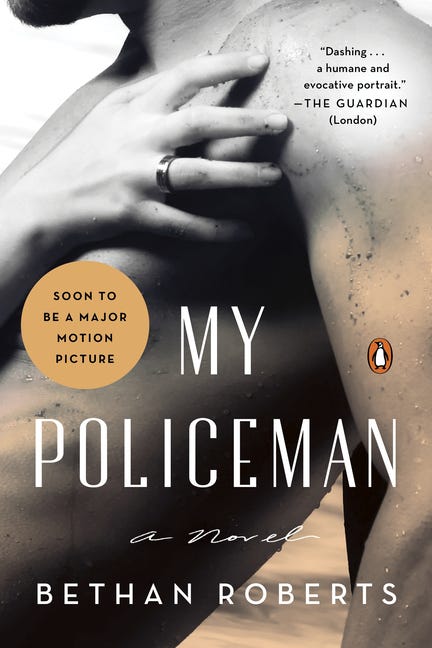
My Policeman by Bethan Roberts
I chose to read this novel because I discovered a movie based on the book was set to debut, and I usually prefer to read the novel first before watching any film based on it. Harry Styles is one of the stars and though I think his acting skills need work, judging from his role in Don’t Worry Darling, I will probably still watch this movie because I love a high-profile train wreck. But I hope it’s not a disaster. I think a good movie could be made out of this novel and even improve upon it.
The novel is a series of journals, one written by Marion in 1999 recounting life with her husband Tom, the titular policeman, and his lover Patrick. While writing this memoir, she is also caring for Patrick who has had a series of strokes. These journals are interrupted by Patrick’s journals from 1957-1959 of his time with Tom and it’s eventual tragic end.
This novel centers Marion, whose life is tragic because she has unknowingly married a gay man, but we also discover that she is to blame for much of the trio’s misery. It is well-written, but I was itching to get a chapter from Tom’s perspective. His motivations remain a frustrating mystery. The time elapsed between journals is also oddly collapsed as if no life happened between them. I enjoyed Roberts use of language, but I didn’t care for the structure of the novel, nor did I enjoy reading yet another tragic end to a gay love story. I’m hoping the movie does all three characters better justice.
My Policeman (The Film)
I thought the movie was an improvement on the book in a few ways. 1) It makes the characters actually apologize for what they did to each other. And it gives Tom and Marion a more compelling reason for why they stayed together. 2) We get to see slightly more into the psyche of Tom. I actually think Harry Styles was perfectly cast because all he needs to do is be charming and somewhat childish, and he can do that pretty well. The character of Tom is still a bit of a cipher, but unfortunately the film also makes Marion a bit of a cipher too. The only character who feels fully fleshed out is Patrick, perhaps because he actually narrates his flashbacks. 3) I liked the present-day sections in the film much better than those in the novel. I thought the actors were excellent and conveyed a lot of emotion in the small moments they are given.
I think I brought a lot of my understanding of the characters from the book to the film., so for someone who watches only the film, a lot of the nuance is lost.
Adaptation #2
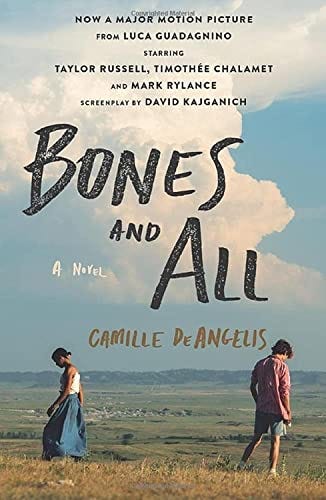
Bones and All by Camille DeAngelis
What the heck did I just read? Now, I knew the premise going in was a cannibal coming-of-age story, but I was pretty shocked by the ending, mainly because I don’t feel like the author did the work of earning it. And why did I read a book about teenage cannibals in the first place since horror is usually not a genre I enjoy? My answer, embarrassingly, is Timotheé Chalemet. He starred in a movie based on this novel that came out in November of 2022, a movie I will likely watch. Do pretty film stars seem to determine what books I choose to read? I’m noticing an alarming trend.
Maren is an Eater, a person who has the overwhelming urge to eat people. There is some sort of supernatural element to this because she and others of her kind are able to eat full-grown adults as children. When we meet Maren, she has just turned 16, and her mother has decided to leave, unwilling to cover and move for her daughter’s unwholesome appetites any longer. Maren travels and finds others of her kind, like Lee, a slightly older boy who also travels to keep his existence as an Eater away from his family, and Sully, an older man whose kind exterior may hide demons within.
I enjoyed the lyrical writing, but I also found it confusing at times, unsure of what of had occurred. And for a novel about cannibalism, it focuses surprisingly little on the gore of the situation.
In the acknowledgements at the front, DeAngelis, a devout vegan, reveals that she had written this novel as an allegory of sorts against eating flesh of all kinds, but this theme is not overtly present in the novel, so much so that I was surprised the comparison of eating people to eating animals was the “message” she was trying to convey.
I doubt any of my readers are going to actually read this novel, so I’m going to explore the themes here a bit more. For a YA novel, this is pretty dark. Maren repeatedly suffers sexual harassment, but the reason why she feeds is her irresistible urge to eat after experiencing physical affection, which blurs the lines between consent and desire. Even her deep friendship with Lee seems marred at the end with unwanted (but maybe wanted) touch. For a first-person narrative, I feel strangely divided from Maren’s thoughts and feelings about wrestling with who she is. I wish her acceptance of who she is had been further discussed. I could see this novel better as an exploration of a female body protecting herself from the unwanted advances of men, but DeAngelis doesn’t really investigate this. I think that would have been a better aim than a commentary on eating meat.
Bones and All (The Film)
What did I just watch!? This is at once one of the most beautifully shot movies I’ve ever seen and also one of the grossest. It’s your typical horror/romance/road trip/coming-of-age story about young adult cannibals searching for their own goodness and acceptance in light of their violent impulses while traveling through the rust belt of 1980’s America.
I think I can safely say that I liked the film better than the novel. The tone was more consistent and the theme of outcasts finding love and acceptance with each other was beautifully expressed. I would expect no less from director Luca Guadagnino of Call Me By Your Name fame. He knows how to film dreamy landscapes and hot young stars like Timotheé Chalamet and Taylor Russell, both of whom are excellent at portraying the nuances of their characters. Guadagnino also does not shy away from showing the gruesome, shameful vision of the eaters eating people. The gore of this was somehow harder to watch than most other body horror I’ve seen, not that I’m a connoisseur of body horror.
The film loosely follows the same basic plot structure, but has importantly omitted Maren’s desire to feed only when she is affectionate with someone. Lee’s rules are that he only eats assholes; Sully only eats those close to death; Maren knows that she must eat, but has not yet come to terms with the fact that she must take a life to do so. In the film, she relies on Lee to catch and kill their prey even to the very end when (SPOILER ALERT), a fatally injured Lee begs her to eat him, bones and all, so that she can be sustained and that they can also still remain with each other in some way. In some ways that is a beautiful expression of love, but…cannibalism…yeesh.
Many reviewers have commented that this is a queer story, an allegory of LGBTQ youth striving for acceptance. I don’t know if that completely jives with the plot, but the characters are definitely queer-coded. Lee dresses with a gender fluidity likened to the thrift-store version of Harry Styles, and he is obviously attracted to both sexes. The first time we see Maren succumb to her urges is when talking with another girl at a sleepover, and the sexual tension between the two of them is palpable. I do think the film is trying to say something about outcasts on the margins of society and their need for acceptance and love, but because their otherness requires harming people, it’s not quite a one for one comparison, especially because the only other eaters we meet besides Maren and Lee are particularly menacing. Mark Rylance’s Sully is creepier than any character has a right to be. And Michael Stuhlbarg is nearly unrecognizable as a terrifying redneck eater.
Some aspects of the story felt unfinished and unexamined. For example, there is a time where Maren and Lee part because she is disturbed they eat a man with a family, yet she returns to Lee not long after without a portrayal of her struggle with these thoughts. The plot is at times unevenly paced, and though I do like the ending better than the novel’s ending, which is amazingly more bleak, something still felt off about it, but I can’t quite pinpoint what.
Anyway, I watched the teenage cannibal movie, discovered the amazing acting of Taylor Russell, am even more impressed with Chalamet’s skill, and will forever by haunted by the image of Mark Rylance in tighty whities feeding on an old woman. I can’t imagine any of my readers will likely go out of their way to watch this film, and for most I would say it isn’t worth your time. It was an interesting experiment in film-making, but it also left me feeling unsatisfied and hungry for more substance. (Sorry, I had to do that at least once).
Adaptation #3
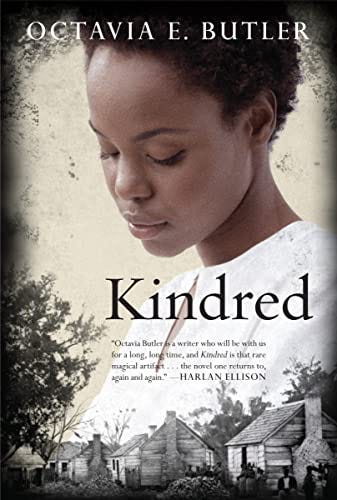
Kindred by Octavia E. Butler
Kindred is a rich text of a novel by the incomparable Octavia E. Butler, the first sci-fi writer ever to win a MacArthur Genius grant. I was first introduced to this novel in grad school and loved it. I wrote a 20-page essay about the connections between insanity, creativity, and time as portrayed in the novel, so I have spent a lot of time thinking about the book’s themes.
The basic plot follows Dana, a Black writer in the 1970’s who, on her 26th birthday, is suddenly jolted back into the past to save a young white boy named Rufus and is just as suddenly pushed back into the future. Her white husband Kevin is incredulous until he ends up traveling back in time with her to save the same boy, this time a little older. Rufus is the son of a plantation owner in 1815 Maryland, the prime of slavery, so to survive Kevin has to claim that he is Dana’s master. Dana learns that Rufus and the freeborn Black child Alice are her ancestors. Her purpose seems to be ensuring that her very existence is secured by keeping Rufus and Alice alive…and together.
Though there is the time travel element (that is never really explained), this novel reads more like historical fiction, and is in fact patterned after slave narratives. Through this premise, Butler gives us the chance to explore how a modern person on the other side of slavery would grapple with its complexities and atrocities, connecting the system of slavery to the racism of the present.
Because the book is set during the evils of slavery, it is not an easy book to read, but a necessary one to learn more about how slavery actually operated. If you like this, you will probably like the rest of Octavia Butler’s back catalogue. Be sure to read the Parable of the Sower series, about a dystopian future set during the 2020’s.
Kindred (the TV show)
In December of 2022, the show Kindred dropped on FX (you can watch on Hulu). I was excited for this adaptation since I’m such a fan of the book. There are some significant changes though. Dana and Kevin are not an interracial married couple, but have just met. The present time is also set at 2016 instead of 1976, creating a much different and interesting dynamic between the past and present, which we see more of here than in the novel. In the book, the time travel seems to merely be an unexplained device to have Dana travel to the past of her ancestors, but the show seems to be creating more mythology around it, especially by including Dana’s mother (absent in the book) as another major character who has also travelled to the same past.
This first season roughly follows the plot of the first three chapters of the novel and the despicable evil of slavery that Dana and Kevin must witness and at times experience. I think changing the present time period to our near-present day is smart and helps us see the connections between slavery and our current cultural and political climate. Seeing Dana and Kevin’s relationship grow as they experience the terrors of the antebellum South is an interesting choice, creating a fierce bond while navigating the racial politics of past and present. The inclusion of the nosy white neighbors in the present helps us to see that there is still a lot of prejudice that stems from the days of slavery. Kevin’s character is interesting because he is a your average, doughy, bumbling, yet kind, white boy. He has good intentions but not much of a clue to his white privilege until he is starkly confronted with it in the past.
Dana is strong and patient, especially as she ends up needing to hold Kevin’s hand through this experience that is ten times harder for her than for him. But she is also fragile as she encounters the true horrors her ancestors suffered. The show briefly touches on the complexity of Dana needing to maintain the status quo for her own survival in the future, but I would like it to go a bit harder in the next season. Some of her actions, like helping a runaway slave, have more to do with her own self-interest rather than a desire to actually help. She begins to see that her actions can have unintended and disastrous consequences under a system as cruel as slavery. I really hope they explore more of these complexities in the next season, especially because it ended on a big cliffhanger! Unfortunately, I read that FX cancelled the series, but I think a second season might be planned for another network, so here’s hoping!
Adaptation #4
Three Pines
This is the TV version of my beloved Inspector Gamache Mystery series by Louise Penny. I have written about several books of the series here, here, and here. The tone is much darker than the books, but I also appreciated the continuous arc highlighting the serious problem of missing and murdered Indigenous women. The series also felt appropriately Canadian, specifically Québécois as many of the character speak only French.
Eight episodes were filmed for Season 1, with two episodes each to “cover” a Louise Penny book. Honestly, I don’t think two episodes is enough to adapt each novel, and sometimes I felt that the actual plot and focus on the friends of Three Pines was sacrificed for the new focus on the disappearance of Blue Two-Rivers, a completely new invention for the show.
Alfred Molina is perfect as Armand Gamache. I honestly don’t know who could have played the kindhearted, but serious detective better. I also love that they changed Inspector Lacoste’s character to an Indigenous woman, and had an Indigenous woman join the Three Pines community. The actress who played Clara grew on me, but she’s still too young. Peter is played as more of an asshole than I think he really is. And Myrna’s casting is just wrong. Retta of Parks and Recreation fame would have been perfect (but is she Canadian?). And why did they change Gabri’s character to have Olivier’s name and vice versa? Just to confuse me?
If you have never read the novels, the casting probably won’t bother you at all. But I do hope there is a second season and that in that season we get to know more about the residents of Three Pines.
Adaptation #5
Heartstopper (TV Show)
Heartstopper is based on the YA graphic novel series of the same name, which I have written about here. The first season roughly covers the plot points of Book 1 and sections of Book 2 where Nick, the rugby star, and Charlie, the outed gay boy, meet and fall in love.
Like the books, this is such a sweet and innocent love story that doesn’t shy away from serious topics. The heaviness of bullying or the ordeal that is coming out never drowns out the joy. This is a pretty straight (haha) adaptation from the source material, with cute animations that remind us of it’s graphic novel origins.
I loved that the TV series fleshed out some of the other characters that were more tangential in the first book. We get a deeper look at Elle (the trans girl in their friend group who didn’t feature heavily until later books) and the lesbian couple of Tara and Darcy. The token straight, Tao, also provides great comic relief.
This was also just a great representation of what good teenage friendships and romances should be, queer or not. I have to say that most of the teen shows that center straight teens(which is most of them) have a lot more dysfunction, focus on sex, and — oddly— murder. Riverdale is definitely not #relationshipgoals. For a model of how people should support and love each other, I would have my kids watch this show (when they are a bit older of course).
I’m excited for future seasons to see where they take the characters, and whether or not the writers stick as closely to the books as they have in the first season. Honestly, I think they should because Oseman has already written such compelling and cinematic storylines for her characters.
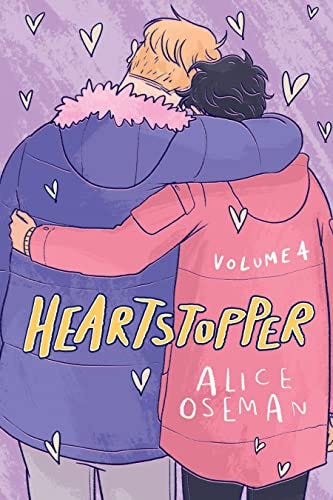
Heartstopper #4
Another great installment of this sweet YA gay romantic graphic novel. This issue primarily centers on how Charlie and Nick navigate dealing with Charlie’s mental health issues, realizing that no one person can fulfill all the needs of another human being. The couple sees that their complete dependence on each other can be unhealthy and that friends, family, and health professionals are needed to live wholehearted lives.
Again Oseman gives us the dream of what we wish we could say or knew to say in hard moments. I imagine that in the next and final installment, she will breathe new life and meaning into these characters we have grown to love. I think this series is so important for LGBTQ youth, to see positive though not perfect portrayals of friendships and romance.
What are your favorite adaptations?
Thank you for reading!